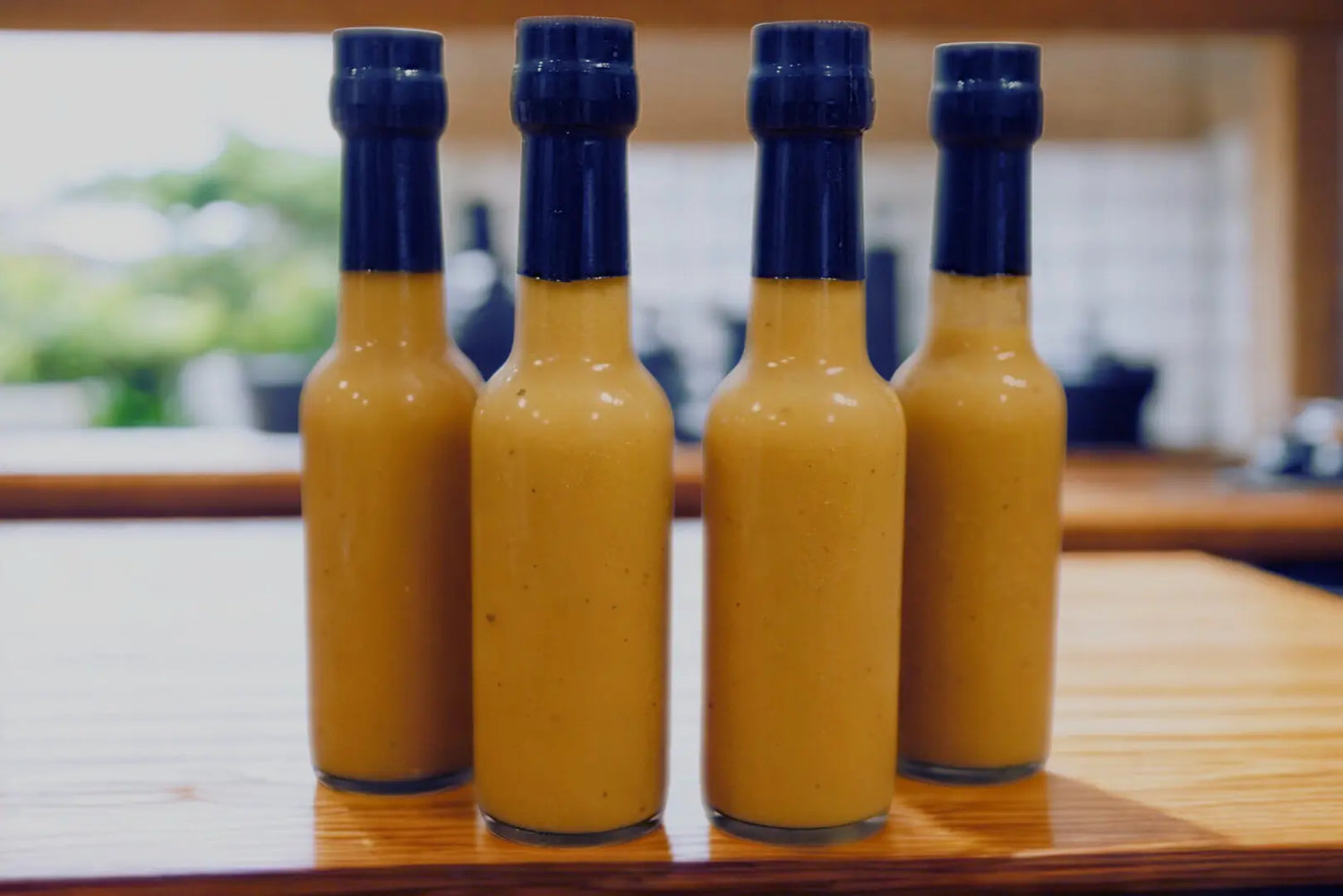
Making your own hot sauce is part science, part instinct. It’s not about dumping peppers into vinegar and calling it a day. It’s about balance, fermentation, acidity, texture, and shelf stability. When you get those right, your sauce stops being a kitchen experiment and starts tasting like something people actually want to buy.
We started small, just blending peppers and salt because I wanted to understand what happens when you let ingredients do their thing. Over time, I realized making hot sauce is like building a flavor ecosystem. Everything interacts: the pepper’s natural sugars, the acidity of your vinegar, the salt content, and the way time transforms it all.
Start with the Base
Every sauce starts with good peppers. Don’t worry about chasing the hottest ones you can find. Focus on quality, freshness, and flavor. Think about what you want your sauce to be: bright and punchy, smoky and rich, or funky and fermented.
Wash and weigh your peppers before doing anything. The ratio of salt to pepper is crucial if you plan to ferment. Around 2 to 3 percent salt by weight will keep harmful bacteria out while letting the good ones thrive. That salt pulls out moisture and creates a natural brine. Cover the mix, let it sit at room temperature, and let time do the heavy lifting. You’ll start to see small bubbles after a few days, which means fermentation is working.
Control the Variables
Here’s where most people go wrong. They skip the science. You don’t need a lab setup, but a cheap pH meter is non-negotiable if you want your sauce to last. Aim for a pH below 4.0, ideally around 3.4 to 3.6. That’s the sweet spot where spoilage bacteria can’t survive.
If you want to get serious, start learning about water activity (aₑₓ) too. It measures how much free water your sauce has available for microbes to grow. Anything below 0.85 is considered shelf-stable. You can lower water activity with salt, sugar, or solids like cooked vegetables, but remember, every change affects flavor and texture.
Blending and Texture
Once your base is ready, it’s all about consistency. Blend until smooth, then strain if you want something thinner. Add vinegar slowly and taste as you go. If you’re aiming for longer shelf life, vinegar does more than add tang. It helps control pH and keeps your sauce stable over time.
Use clean, sterilized bottles. If you’re making sauce for home use, refrigeration is fine. If you plan to sell it or give it away, test your batch. Small-batch doesn’t mean sloppy. Stability and safety matter as much as taste.
Testing and Iteration
The best sauces don’t happen on the first try. Every batch teaches you something. Take notes: how long you fermented, what your pH was, how it tasted after a week or a month. Consistency comes from documentation, not luck.
Once you find a formula you like, start testing small tweaks. Try different vinegars or experiment with cooking times to see how heat affects flavor. The goal isn’t to copy anyone else’s sauce. It’s to make one that feels like yours.
Keep It Real
The first time you see your sauce bottled and sealed, it hits different. You start to understand how much goes into every label on a store shelf. It’s work, but it’s rewarding work. Something you can taste in every drop.
If you want to start your own hot sauce journey, grab a scale, a blender, and a notebook. Learn what your pH meter is telling you. Respect fermentation. Keep everything clean. And keep tasting. The rest will come naturally.