
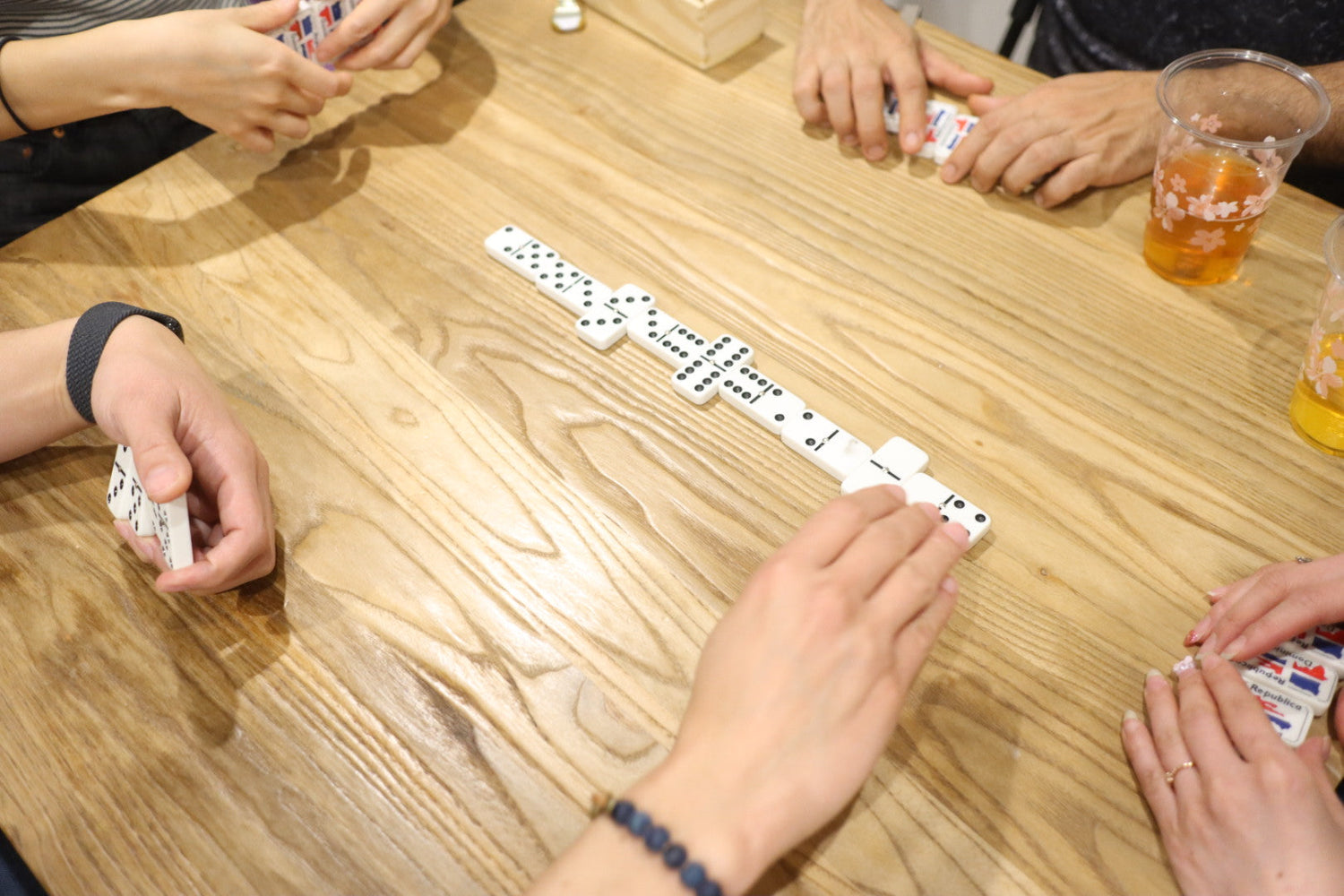
In the Dominican Republic, when the night air cools and the music drifts into the street, domino tables come out. The tiles click, someone laughs, someone wins, and suddenly the whole block feels like a party.
This is not just a game. It’s part of everyday life.
What Is Domino?
Domino is a tile game played with small rectangular pieces, each divided into two sides with dots. You match the numbers, building a chain. Four people play in teams of two. You sit across from your partner, try to read each other, and work together to outplay the other team.
Each player starts with seven tiles. The one holding the highest double goes first. You play one tile per turn by matching a number on the table. If you can’t play, you pass. The round ends when someone runs out of tiles, or when no more moves are possible. The fewer tiles you have left, the better.
It’s simple. But once you start reading the table, tracking the plays, and syncing with your partner, that’s when it gets serious.

How It Became a Dominican Tradition
The Spanish brought dominoes to the Caribbean centuries ago, but Dominicans made it their own. Over time, it became more than a game. It became part of the rhythm of daily life.
Today, you’ll see people playing in front of houses, outside corner stores, and even on beaches. Parents teach their kids. Neighbors challenge each other. Everyone plays.
It’s passed down like a recipe. Each family adds its own style. Everyone has an opinion about the best strategy. And no one ever forgets a win.
The Famous Table Slap
Dominican players are known for one thing: the table slap.
When you play a good tile, especially a winning one, you don’t just place it quietly. You slam it down. The sound echoes. Heads turn. It’s part celebration, part show.
The slap isn’t about being rude. It’s confidence. Joy. A signal that you’re in control. It lights up the game, and everyone leans in.
What Happens Around the Table
Domino isn’t played in silence. There’s music in the background. Plates of fried plantains or snacks passed around. A cold beer sweating on the table. Kids watching. Friends teasing each other. Someone always says, “Just one more round.”
The table becomes the center of the night. No rush, no screens, no pressure. Just connection.

More Than a Game
For many, domino is a kind of language. It’s how fathers and sons talk without speaking. How neighbors become friends. How stories are shared between plays.
It’s not about the score. It’s about sitting together, night after night, and knowing that someone saved you the fourth seat at the table.

What It Feels Like
A domino night feels like a mini festival. The sound of laughter, the slap of tiles, the glow of a streetlight overhead. It’s casual and loud and full of energy.
And no one wants to leave first.
Something Familiar
For Japanese readers, imagine a winter night around the kotatsu. Or a summer evening at a festival, surrounded by friends and food and music. That’s what domino night feels like.
Different game, same warmth.
In the end, all you need is a table, a few tiles, and people you love playing with. The rest takes care of itself.

0 comments